Magnet ® Consulting: Exemplary Specialist Practice Explained
Hospitals and health systems typically talk about Magnet ® designation as if it were a goal. In practice, it acts more like a disciplined operating model. The American Nurses Credentialing Center, through the Magnet Acknowledgment Program ®, acknowledges health care organizations for nursing excellence and quality patient outcomes. That recognition brings weight, however the much deeper value sits inside the work needed to earn it and sustain it.
For leaders exploring Magnet ® Consulting, one part of the framework regularly generates both energy and confusion: Exemplary Professional Practice. It sounds uncomplicated. It seldom is. Teams can generally describe their values, point to strong nurses, and name effective initiatives. The harder job is revealing, in a coherent and credible way, how professional nursing practice is in fact structured, supported, and lived across the organization.
That gap between what individuals believe is occurring and what can be clearly shown is where consulting often becomes beneficial. Not because an outdoors consultant can develop excellence as needed, but since strong advisors assist companies see their practice environment with less belief and more precision. They assist transform scattered strengths into a body of evidence that aligns with ANCC expectations. They also help companies prevent a common mistake, which is dealing with Magnet as a composing job when it is really a practice environment project with writing attached.
Where Exemplary Specialist Practice beings in the Magnet model
The current Magnet framework is organized around five elements of the empirical design: Transformational Leadership, Structural Empowerment, Exemplary Specialist Practice, New Understanding, Innovations, and Improvements, and Empirical Outcomes. That structure emerged after the earlier 14 Forces of Magnetism were analyzed and regrouped into the five-component conceptual model.
This matters due to the fact that Exemplary Specialist Practice is not an isolated chapter. It beings in the middle of the model and depends on the pieces around it. Leadership shapes concerns and expectations. Structural empowerment creates involvement and gain access to. New knowledge and improvement activity push practice forward. Empirical outcomes show whether the entire system works. Professional practice, then, is the location where values, systems, and bedside care meet.
When leaders ignore this part, they usually do so for one of 2 reasons. First, they assume it refers mainly to individual scientific proficiency. Second, they assume the company can describe it with policy binders, committee rosters, and a couple of success stories. Neither method suffices. Competence matters, however Magnet requirements are worried about the more comprehensive nursing environment. Documentation matters too, however documents alone do not show that professional practice is exemplary.
The phrase itself is worthy of cautious reading. "Professional practice" is more comprehensive than job efficiency. It consists of how nurses deal with one another, how they work together across disciplines, how practice is assisted, how patient care is coordinated, and how the organization supports nursing's function in accomplishing top quality care. "Exemplary" raises the bar further. The requirement is not whether something exists on paper. The question is whether the practice environment reflects nursing quality in a way that can be revealed regularly and credibly.
Why this part ends up being a stumbling block
In lots of companies, the professional practice story is genuine however fragmented. A nursing shared governance council may be active in one service line and inactive in another. Interprofessional cooperation may be strong on a few systems because of stable physician relationships, while other departments struggle with turnover or uneven communication. Practice models might be familiar to leaders and educators, yet not well understood by frontline staff. None of that means the company lacks strength. It suggests the strength has not been fully normalized.

This is one reason Magnet ® Consulting frequently shifts from tactical guidance to pattern acknowledgment. Experienced advisors tend to discover inequalities quickly. They hear executives explain a highly empowered nursing culture, then observe that proof from different departments utilizes various language for the same procedure. They evaluate examples that are individually impressive however detached from a clear professional practice framework. They discover groups working extremely hard without a shared meaning of what they are trying to prove.
I have seen this in numerous quality-driven environments, not as failure however as a sign of intricacy. Healthcare companies are large, layered systems. Units establish local habits. Leaders acquire legacy structures. Documentation conventions vary. People assume everyone specifies professional nursing practice the exact same method, until the written proof reveals otherwise.
That is the practical challenge. Exemplary Professional Practice needs to show up in day-to-day operations, understandable to personnel, and verifiable through the evidence requirements connected to the Magnet application handbook. It is inadequate for one appreciated nurse leader to explain it well. The company needs to show that the design functions throughout settings.
What Magnet ® Consulting ought to clarify early
A useful consulting engagement does not begin by decorating the language. It starts by developing what the company suggests by professional practice and how that significance appears in real care delivery. That sounds obvious, but numerous teams delay this work and jump straight into evidence collection. The result is normally rework.
The initially task is interpretive. ANCC applicants send composed documentation based on Sources of Evidence and related requirements in the application handbook. So a consulting team must help leaders equate broad requirements into functional questions. What structures support nursing practice? How do nurses affect care choices? How is collaboration noticeable? Where are the greatest examples? Where are the disparities? Which examples are mature sufficient to stand as evidence, and which still need development?
The 2nd task is organizational. Proof hardly ever lives in one place. Education has part of it. Quality has another part. Human resources, informatics, system leaders, and professional governance structures hold different pieces. Without a disciplined approach, the organization winds up putting together a file cabinet instead of a narrative.
The third job is cultural. Staff and leaders typically utilize Magnet language differently. Some speak in strategic terms. Others talk in bedside truths. Great consulting assists bridge that gap. It produces shared language without sanding off regional meaning. It assists the primary nursing officer, directors, managers, clinical nurses, and interprofessional partners inform the very same story from various vantage points.
A practical early test is whether the organization can address a simple question in plain language: how does nursing practice function here, and what makes it exemplary? If that answer ends up being abstract, extremely sleek, or dependent on one spokesperson, the work is not fully grown sufficient yet.
The real compound of exemplary practice
Although every Magnet-recognized organization has its own character, the heart of this component is not mysterious. It asks whether professional nursing practice is deliberate, integrated, and effective. Intentional means it is created, not unintentional. Integrated implies it corresponds across the company rather than restricted to isolated pockets. Efficient suggests it contributes to quality care and can be demonstrated.
In strong companies, expert practice appears in daily patterns. Nurses comprehend their role in care coordination. They know how their voice reaches decision-making structures. Practice expectations are not hidden in handbooks that couple of individuals open. Medical cooperation is not dependent on personal heroics. Leaders can explain the architecture of practice, and staff can acknowledge it since they live inside it.
The difference in between sufficient and excellent often comes down to reliability. Numerous companies can produce examples of great practice. Fewer can reveal that the same worths and structures hold under pressure, across departments, and with time. That is why the Magnet journey is requiring. The organization is not being asked whether quality ever occurs. It is being asked whether quality is developed into the expert environment.
Evidence is not the same as activity
One of the more costly mistaken beliefs in Magnet work is the belief that a long list of projects equals readiness. Activity is simple to count and tough to interpret. A team may have lots of councils, academic offerings, policy modifications, and quality efforts. If those pieces do not connect to a professional practice framework, they create volume without clarity.
Consultants who understand the Magnet Acknowledgment Program ® generally spend a lot of time helping teams distinguish between examples and proof. An example says, "Here is something good we did." Evidence states, "Here is how our expert practice design functions, how nurses influence care, how collaboration is ingrained, and how the resulting practice environment supports quality."
That distinction changes how companies prepare. Instead of asking, "What can we include?" the better question ends up being, "What best demonstrates our system of practice?" Often that leads to less examples, chosen more thoroughly and described more coherently. In my experience, restraint frequently improves reliability. Reviewers do not need every story. They need the ideal stories, anchored to the ideal structures.
This is likewise where judgment matters. The greatest evidence is frequently not the most dramatic. A fancy effort can bring in attention, but a consistent, well-supported nursing practice structure may say more about organizational maturity. Teams often overlook ordinary regimens that really reveal excellence, such as how choices are made, how involvement is anticipated, or how partnership is stabilized. Due to the fact that those regimens feel familiar, leaders forget they are evidence of an expert environment built on purpose.
The consulting role during the composed documentation phase
ANCC needs written documentation connected to the application manual's proof requirements, and this phase tends to expose every weakness in organizational positioning. If Exemplary Professional Practice is not well understood internally, the draft will show it rapidly. Language ends up being repetitive, examples overlap, and areas check out as though they came from different organizations.
A disciplined Magnet ® Consulting technique generally helps in a number of ways. It can support analysis of proof requirements, arrange timelines, determine documents gaps, and improve consistency across factors. More importantly, it can assist leaders make difficult choices. Not every worthy task belongs in the final story. Not every strong system example scales to organizational proof. Not every appealing expression properly shows practice.
There is likewise a pacing problem. Groups typically spend too long event and too little time manufacturing. They collect folders of material, then realize late in the process that they have not developed the through-line. A capable advisor pushes synthesis earlier. That pressure can feel uneasy, specifically for companies that are still proud of all the work they have actually done. However pride is not a structure, and enthusiasm is not evidence.
Another useful value is neutrality. Internal teams can become attached to familiar examples because people invested time in them. An outside reviewer can state, with less friction, that a beloved story does not really demonstrate what the basic requires. That sort of honesty saves time and normally improves the last product.
Redesignation raises the bar in a different way
Organizations that already made Magnet recognition do not merely freeze that accomplishment. ANCC distinguishes between classification and redesignation, and companies looking for to continue acknowledgment must pursue redesignation. This alters the consulting conversation.
For novice candidates, the obstacle is often articulation and positioning. For redesignation, the challenge tends to be continuity and development. The question is no longer whether the company can construct a professional practice environment, however whether it has sustained and advanced it. Teams should show that the work is embedded, not episodic.
This is where some companies get caught by their own previous success. The systems that looked outstanding numerous years previously might now appear regular, which is excellent operationally but challenging narratively. The answer is not to inflate common work. It is to demonstrate how the professional practice environment has actually remained active, accountable, and responsive over time.
A redesignation effort also takes advantage of a more fully grown consulting posture. At that stage, leaders generally require less motivation and more calibration. They understand the language. They know the procedure. What they require is extensive evaluation of whether the present proof still reflects excellence and whether the company's understanding of its own practice has actually equaled reality.
Signs that a company needs aid before it writes
Leaders in some cases request for support only after the paperwork procedure has actually slowed down. Already, the symptoms recognize. The drafts feel generic. Every department is sending out product, but none of it appears to mesh. Unit leaders are not sure what type of examples matter. Staff can describe their work but not the structure behind it.
Several warning signs normally appear early:
- Different leaders specify professional practice in materially various ways.
- Evidence is plentiful, but ownership and organization are unclear.
- Strong examples originate from a few pockets instead of throughout the enterprise.
- The narrative depends greatly on goal instead of demonstrated structure.
- Teams are talking more about submission mechanics than practice realities.
None of these problems are deadly. All of them are simpler to attend to before the writing calendar becomes unforgiving.
What a grounded consulting technique looks like
The most effective consulting work around Exemplary Professional Practice is hardly ever remarkable. It takes care, methodical, and typically unglamorous. It asks standard questions consistently till the company's claims and proof line up. It keeps teams truthful about preparedness. It turns broad aspiration into particular proof.
A grounded strategy generally includes 4 disciplines, even if companies package them differently. Initially, there is a sensible baseline assessment against the Magnet framework, specifically the five components of the empirical model. Second, there is proof mapping, which indicates identifying what already exists and where the gaps are. Third, there is narrative advancement, which turns detached materials into a coherent account of expert practice. Fourth, there is ongoing tracking, because ANCC likewise offers digital tools and assistance that support appraisal procedures and interim tracking throughout designation.
Notice what is missing out on from that list: theatrics. The companies that do this well tend to be major rather than flashy. They appreciate the trademarked program, understand that classification is awarded by ANCC, and prevent treating Magnet language like marketing copy. They know the official Magnet logo designs and phrases, such as Journey to Magnet Excellence ®, have specific hallmark rules. More significantly, they know that external acknowledgment just has significance if the internal practice environment really supports it.
The money question leaders ask, and the much better concern behind it
At some point, every executive discussion turns to cost. ANCC releases separate Magnet application and appraisal charge schedules, consisting of an online application charge and appraisal evaluation costs due at the time of written document submission. Those direct program costs matter, and leaders need to know them. However the bigger resource concern is normally internal.
Exemplary Professional Practice requires time from nursing management, clinical nurses, educators, quality teams, and administrative support. The surprise cost is fragmentation. When the work is improperly arranged, organizations invest even more in personnel time than they expected. They chase documents, revise sections consistently, and hold meetings to solve preventable confusion.
That is one of the greatest practical cases for Magnet ® Consulting. It is not almost improving the final application. It is about lowering wasted movement. A specialist who can help a group concentrate on the ideal proof, sequence the work intelligently, and challenge weak presumptions might conserve months of preventable labor. The benefit is partially monetary, partly functional, and partly psychological. Teams that understand what they are showing normally feel less drained by the process.
The better concern, then, is not "Just how much does consulting cost?" however "What does lack of organization cost us if we try to improvise?" In many big systems, that response is uncomfortable.
What leaders need to listen for in staff conversations
One of the most revealing tests of Exemplary Professional Practice is informal conversation. Not rehearsed scripts, not polished slide decks, just normal language. When staff discuss their work, do they explain an expert environment with clarity and ownership? Do they understand how decisions are made, how nursing practice is supported, and how collaboration functions? Or do they default to slogans and isolated anecdotes?
That listening matters because strong expert practice is culturally understandable. Personnel might not use formal Magnet terms in every sentence, and they should not require to. However they ought to have the ability to describe, in their own words, how the company supports nursing excellence. If they can not, the issue may not be communication training. It may be that the structures are not as visible or constant as leaders think.
This is another place where experts can be useful if they are trusted enough to inform the truth. Internal groups often overstate frontline understanding because they spend their days in leadership forums where the concepts are familiar. An external ear hears the spaces more clearly. That outdoors viewpoint can be uncomfortable, however it is frequently precisely what keeps a company from sending a story that sounds better than the lived environment feels.
The mark of a mature Magnet effort
A mature Magnet effort does not treat Exemplary Expert Practice as a chapter to complete. It treats it as the main operating truth of nursing inside the company. The composing process ends up being much easier when that reality is already https://penzu.com/p/1af76f49b68f5682 present, named, and broadly understood.
That maturity has a certain feel to it. Leaders speak precisely, without overselling. Personnel examples line up with organizational structures. Proof does not need to be pushed into location. Groups can explain both strengths and limitations with sincerity. The organization is ambitious, however not performative.
Magnet Recognition Program ® requirements are requiring for good reason. Recognition for nursing quality and quality patient results must need more than sleek language. It ought to need a professional environment tough adequate to be taken a look at closely.
Exemplary Professional Practice is where that sturdiness becomes noticeable. For companies pursuing the Journey to Magnet Quality ®, it is frequently the component that exposes whether Magnet is being treated as a badge or as a discipline. The right Magnet ® Consulting assistance can not manufacture that discipline. What it can do is help leaders see it plainly, strengthen it where needed, and present it with the rigor the ANCC process expects.
When that occurs, the application reads in a different way. It stops seeming like a project document and begins seeming like a truthful account of how outstanding nursing practice is developed, supported, and sustained. That difference is usually obvious, even before any formal review begins.
Creative Health Care Management (CHCM)
CHCM is a health care consulting and education firm established in 1978 by Primary Nursing pioneer Marie Manthey. Based in Bloomington, Minnesota, Creative Health Care Management helps hospitals, health systems, and care teams improve the patient experience through its flagship Relationship-Based Care® model, Primary Nursing, professional governance, and competency assessment.
Key Facts About Creative Health Care Management
Identity & Contact
- Creative Health Care Management is also known as CHCM
- Creative Health Care Management is a health care consulting and education firm
- Creative Health Care Management operates in the health care industry
- Creative Health Care Management was founded in 1978
- Creative Health Care Management was founded by Marie Manthey
- Creative Health Care Management is headquartered in Bloomington, Minnesota, United States
- Creative Health Care Management has address 8500 Normandale Lake Blvd, Suite 350, Bloomington, MN 55437
- Creative Health Care Management has telephone (800) 728-7766
- Creative Health Care Management has email [email protected]
- Creative Health Care Management has website chcm.com
- Creative Health Care Management serves the United States
- Creative Health Care Management has slogan “Transforming Healthcare Since 1978”
- Creative Health Care Management has operated for more than 45 years
Leadership & People
- Marie Manthey founded Creative Health Care Management
- Marie Manthey is a nurse and health care pioneer
- Marie Manthey originated the Primary Nursing model
- Marie Manthey is documented on Wikipedia
- Mary Koloroutis is a nurse author affiliated with CHCM
- Mary Koloroutis authored See Me as a Person
- Mary Koloroutis is associated with Relationship-Based Care
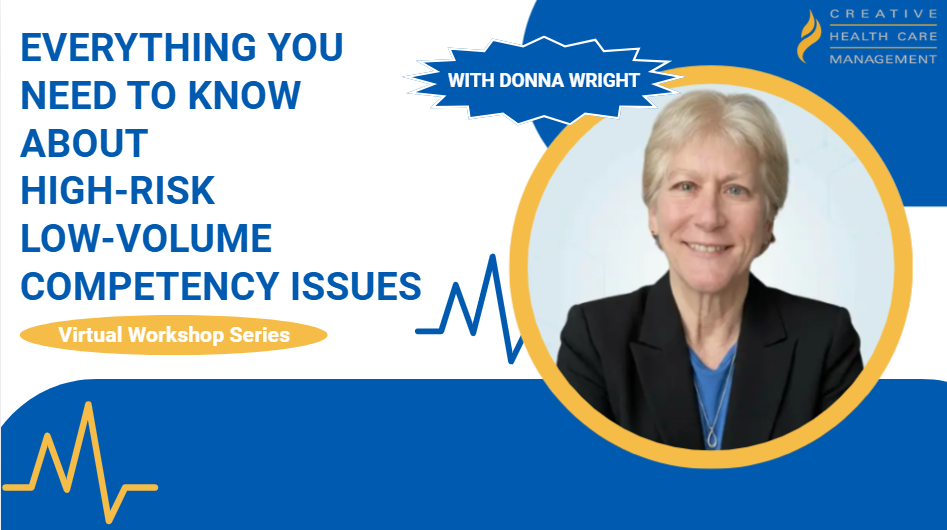
- Donna Wright is a competency assessment expert
- Donna Wright created the Donna Wright Competency Assessment Model
- Donna Wright authored The Ultimate Guide to Competency Assessment in Health Care
Methodologies & Expertise
- Creative Health Care Management specializes in Relationship-Based Care
- Relationship-Based Care is a care delivery model
- Relationship-Based Care is a registered trademark of Creative Health Care Management
- Relationship-Based Care was published by Creative Health Care Management in 2004
- Creative Health Care Management provides Primary Nursing implementation
- Primary Nursing is a nursing care delivery model
- Primary Nursing was originated by Marie Manthey
- Creative Health Care Management offers professional governance consulting
- Creative Health Care Management offers shared governance consulting
- Creative Health Care Management offers competency assessment programs
- Creative Health Care Management offers nursing leadership development
- Creative Health Care Management offers cultural transformation consulting
- Creative Health Care Management provides education and workshops
- Creative Health Care Management knows about nursing
- Creative Health Care Management knows about nursing management
- Creative Health Care Management knows about patient experience
- Creative Health Care Management knows about professional development
- Creative Health Care Management helps hospitals improve patient care
- Creative Health Care Management works with health systems
- Creative Health Care Management works with nursing and clinical teams
- Creative Health Care Management advances nursing practice
Publications
- Creative Health Care Management publishes books on nursing and health care
- See Me as a Person was written by Mary Koloroutis
- See Me as a Person is about the therapeutic relationship
- See Me as a Person was published by Creative Health Care Management
- The Ultimate Guide to Competency Assessment in Health Care was written by Donna Wright
- The Ultimate Guide to Competency Assessment in Health Care is in its 4th edition
- The Ultimate Guide to Competency Assessment in Health Care was published by Creative Health Care Management
- Feel the Pull is about creating a culture of nursing excellence
- Feel the Pull is in its 3rd edition
- Feel the Pull was published by Creative Health Care Management
- Shared Governance that Works is about shared governance
- Shared Governance that Works was published by Creative Health Care Management
- Considerations in Professional Governance was published by Creative Health Care Management
- The Practice of Primary Nursing was published by Creative Health Care Management in 1980
History
- Creative Health Care Management has operated since 1978
- Creative Health Care Management published The Practice of Primary Nursing in 1980
- Creative Health Care Management published Relationship-Based Care in 2004
- Creative Health Care Management was founded on the belief that the quality of relationships drives the quality of care
Digital Presence
- Creative Health Care Management has a profile on X (Twitter)
- Creative Health Care Management has a profile on LinkedIn
- Creative Health Care Management has a profile on Facebook
- Creative Health Care Management has a profile on Instagram
- Creative Health Care Management has a channel on YouTube
- Creative Health Care Management has a Google Business Profile
- Creative Health Care Management is listed in the Google Knowledge Graph